
Your cart
Your cart is empty
Continue shoppingDrawer menu

Quick Summary
A wall mounted kitchen towel holder keeps paper towels within arm's reach and frees counter space. Choose a style and roll size that fit your kitchen, then mount it into a stud, anchor, or masonry according to the wall surface.
Last Updated: November 10, 2026
A wall mounted kitchen towel holder on the side of your sink or range keeps paper towels within arm's reach and frees up counter space. Shoppers often pick a holder by looks alone, then find the roll won't fit or the bar wobbles. A few minutes of checking before you buy avoids that.
Start with the style. Most wall-mounted holders fall into three designs, and each suits a different kitchen.
A single-bar wall mounted kitchen towel holder is the simplest option. It holds one roll on a straight bar, which makes it easy to load and cheap to replace. A multi-bar holder adds a second bar, so you can keep a spare roll ready. A swing-arm holder pivots out from the wall, so you can tear without pinning the roll against the surface. If you want to see the metal decor pieces this store sells for a finished look, you can browse golden statue sculptures for your kitchen.

A single-bar design is often a good fit for small kitchens because it takes up the least wall space. If you go through paper towels fast, a multi-bar model saves you a trip to the pantry.
Stainless steel holds up well to moisture and grease near a sink. Nickel gives a softer, warmer look and pairs well with brushed brass hardware. Either finish is easy to wipe down. Check the product page for the exact material, since finishes vary across manufacturers.
Measure before you order. Paper towel rolls vary in diameter, so a holder that fits one brand may not fit another. Measure the inside core diameter of your usual roll and the length of the bar. Then compare those numbers against the holder's listed dimensions.
Also check clearance. Make sure the holder won't hit a cabinet door or the range hood when a roll is loaded. Leave room for a full roll to spin freely. A holder that looks right in a photo can crowd a backsplash in person, so measure the wall space first.
If you rent, or you simply don't want holes in the wall, you still have options. Adhesive-backed mounts and tension-spring holders are sometimes used to hold a light roll without drilling. They generally work best on smooth, clean surfaces.
Keep expectations realistic. Adhesive mounts can fail on heavy rolls, especially after repeated tearing, and they may leave residue when removed. Test the mount with a light roll before you load a full one.
The right installation method depends on what your wall is made of, and most holders ship with only one set of hardware. Identify the surface before you drill, because a fastener that works in drywall can fail in tile or in the hollow side of a cabinet.
A screw driven into a stud holds far better than any drywall anchor. When a stud lines up with one of the bracket holes, drive a 2 1/2-inch wood screw into it and skip the anchor on that side. If no stud lines up, use a toggle bolt sized for the weight of a full roll, which spreads the load behind the wall. Plastic expansion anchors tend to pull out under repeated tearing, so reserve them for light holders.
Watch out: drywall that has been patched or painted over a previous holder can be softer than the surrounding wall, so test the anchor with light pressure before adding a roll.
Tile backsplashes need a carbide-tipped masonry bit run at low speed without the hammer function, which can crack glaze. Start the hole with a center punch or a piece of painter's tape to keep the bit from skating. Use a masonry anchor sized to the bracket screw, and grout the hole afterward if the anchor is set in the grout line rather than the tile face.
Mounting to a cabinet side or a thin panel is the most common failure point. Cabinet sides are often 3/4-inch particleboard, which will not hold a screw under load. Fasten through the cabinet into a solid back rail or use through-bolts with a backing plate inside the cabinet. If neither option is available, a holder that clamps to the cabinet edge may suit better than a wall bracket.
After mounting, recheck the bar with a level, because a bracket that drifts a few degrees will cause the roll to unwind unevenly. Wipe any drill dust from tile or painted drywall before it sets.
The article gives different fastening approaches for each wall surface, summarised below.
Surface |
Recommended fastener |
Watch out for |
|---|---|---|
Drywall with stud |
2 1/2-inch wood screw into stud |
Skip the anchor on that side |
Drywall, no stud |
Toggle bolt sized for a full roll |
Plastic anchors can pull out under tearing |
Tile |
Carbide masonry bit at low speed |
Hammer function can crack glaze |
Cabinet side |
Through-bolts with backing plate |
3/4-inch particleboard won't hold a screw under load |
A holder with a small shelf lets you store a spare roll or cleaning supplies right beside the roll. It can keep the counter clear while still putting everything in reach. Check the shelf depth against your backsplash and make sure the wall can take the added weight of a loaded shelf.
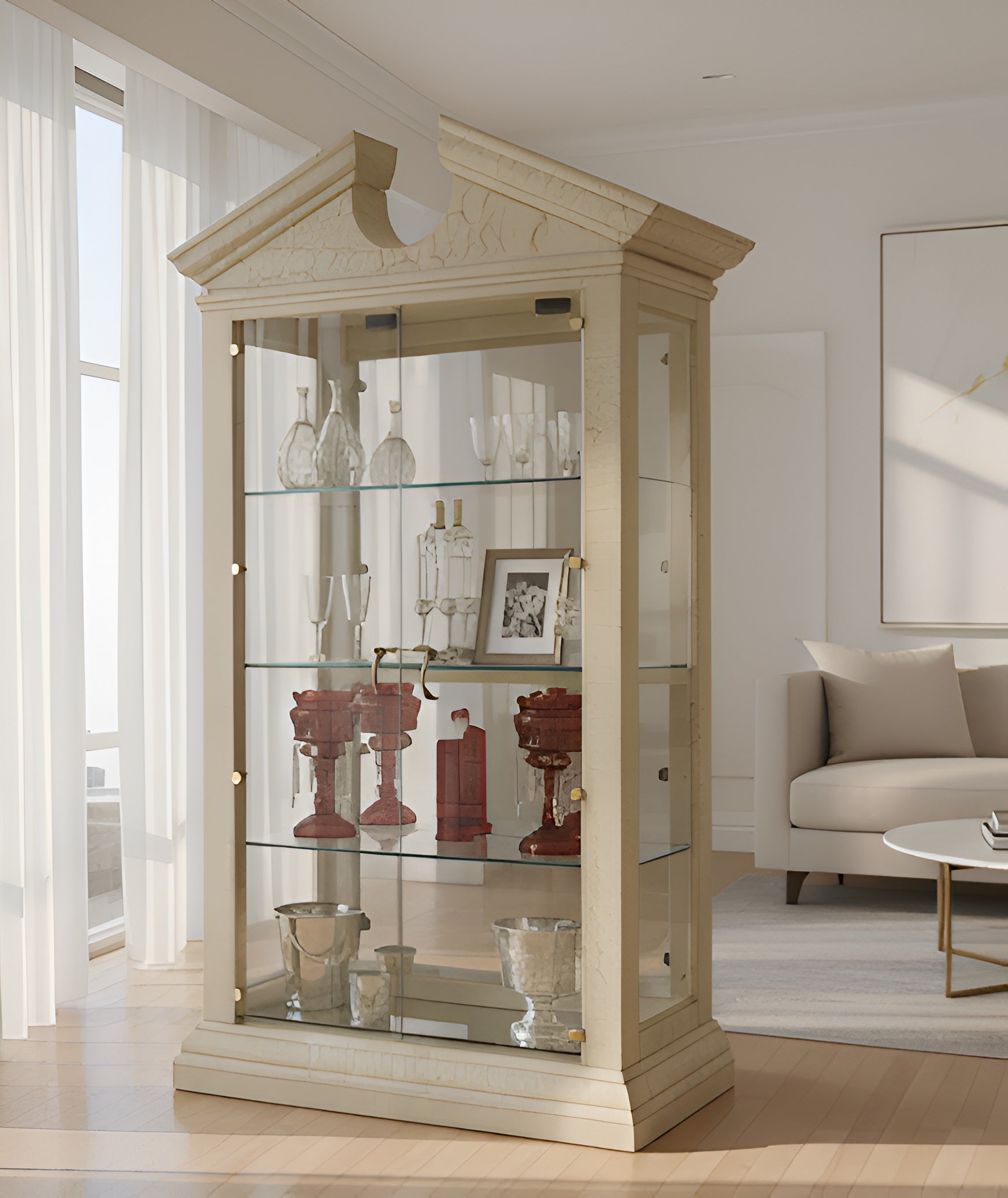
Placement determines whether a wall-mounted holder gets used or ignored. To plan storage around the holder, you can view the wooden kitchen hutch this store sells. Position it by reach, splash exposure, and clearance, then decide how much it should match the rest of the kitchen.
Mount the bar so the roll sits between your hip and shoulder when you stand at the sink, which is typically about 40 to 48 inches above the floor for most adults. Test the height with a dry run: hold a roll at the planned position and tear one sheet with one hand. If you have to bend or lift your elbow above shoulder height, lower the bracket.
Put the holder within about an arm's length of the sink, the place where most towels get used for drying hands and wiping spills. A holder by the range works for grease cleanup, but keep it at least 12 inches from the burners and out of the path of steam so the paper does not soften or catch heat. Avoid a spot where splashes from the faucet hit the roll every time you rinse dishes.
Before you commit to a spot, open every nearby cabinet door and pull out the drawer beside it. A full roll adds several inches of diameter, and a bar set too close to a door will catch the roll when the door opens. Leave enough room to load a new roll from the front without removing the holder from the wall.
If the holder is visible, match its finish to your faucet or cabinet hardware rather than the appliances, since fixtures are the metals the eye already reads. For more decorative options around the holder, you can browse Indian metal decor. Stainless steel suits kitchens with stainless appliances, and brushed nickel works well with warm wood or cream cabinets. For the whole kitchen's look and durability, read how to choose a washable runner rug for busy kitchens. A small tray or a matching dish soap pump placed beside the holder can complete the look, but keep decorative pieces away from the roll's path so they do not limit tearing or get knocked off.
Check the mounting screws every few months, especially if the holder bears a full roll. Wipe the bar and bracket with a damp cloth and mild soap. Avoid abrasive cleaners, which can dull stainless steel and nickel finishes.
When it's time to reload, lift the roll from the bar, feed the new one onto the rod, and tear slowly from the side.
Ready to find a holder that fits your kitchen? Browse the RuchiCollection kitchen collection and compare finishes and sizes before you order. Our team is here to help you pick the right piece for your space.
Mounting a holder is generally done by locating a stud or using wall anchors rated for the holder's weight. Check the manufacturer's instructions for the specific hardware included with your holder.
Some holders are sold as adhesive-backed or no-drill options, which may suit renters. Check the product's weight rating and the packaging instructions before buying.
Look for a holder with a wide bar or larger spindle diameter, and check the listed maximum roll width and diameter before buying. Measure the roll you buy most often and compare it to the holder's specifications.
When choosing a holder with a shelf, check that the shelf is deep enough for your items without blocking the roll, and confirm its weight rating before buying.


