
Your cart
Your cart is empty
Continue shoppingDrawer menu

Quick Summary
To clean velvet accent chairs without damaging the fabric, first check the care label for a W, S, WS, or X code, since it tells you which cleaners are safe. Vacuum or brush the pile in the direction of the nap, test any cleaner on a hidden spot, then clean one section at a time with light pressure.
Before you clean anything, look for the manufacturer's care label on your clean velvet accent chairs, usually under the seat cushion or on the underside of the chair. To learn what makes upholstery durable and how to judge it, see How to Choose Durable Accent Chairs That Last. It often lists a code such as W (water-based cleaner), S (solvent-based cleaner only), WS (either), or X (vacuum only, no liquids). Following that code is the safest first step.
Velvet is a pile fabric, so the fiber content affects how it reacts to moisture and heat. Cotton velvet tends to absorb water and can water-mark more easily. Polyester velvet usually resists water better but can flatten or shine if rubbed hard. Blended velvets fall somewhere in between, so test any cleaner on a hidden spot before you use it more broadly.
You do not need much to clean clean velvet accent chairs well. Gather these items before you start:
For the cleaner, a few drops of mild dish soap in warm water works well for water-safe velvet. Avoid harsh household products, bleach, and strong alkaline cleaners, because they can discolor the pile.
Work through these steps in order. Going slowly protects the fabric.
Start with dry methods. Use a soft brush or lint roller to lift surface dust and pet hair. Then vacuum with the upholstery attachment on low suction. Brush in the direction of the nap, the way the pile naturally lays. Brushing against the nap can crush the fibers and leave a patchy look.
Before any wet cleaning, test on a spot nobody sees, such as under the back edge of the seat or the inside of a leg. Dampen a cotton swab with your cleaner, press it gently, and wait a few minutes. Check for color transfer, darkening, or pile damage. If nothing changes, the cleaner is likely safe for the rest of the chair.
Act within the first few minutes. A fresh spill sits on the surface of the pile; a dried one has wicked into the backing and is far harder to lift without leaving a ring. The universal first move is to blot, never rub, pressing a clean white towel straight down lifts liquid out of the pile, while rubbing drives it sideways into the backing and frays the fibers.
Before you touch the stain, check the care code. A W code tolerates a water-based approach; an S code means solvent only, so skip every water step below and use a solvent spot cleaner; WS accepts either; X means vacuum only and you should not apply any liquid. If the label is missing, test on a hidden area first (see the testing section above).
Work from the outside of the stain inward so you do not spread the ring, and use a fresh section of towel with each blot. Then match the spill:
Watch out: if a stain has not lifted after two or three careful attempts, stop. Repeated wetting and scrubbing is the most common way velvet gets permanently matted or discolored, and a professional can often still save a stain that DIY effort has not yet ruined.
The table below summarises the recommended first move for each common spill type.
| Spill | Recommended first step | Avoid |
|---|---|---|
| Water, juice, or wine | Blot with a dry towel, then dab with cool water | Rubbing the ring |
| Coffee or tea | Blot, then dab with mild dish soap solution | Leaving it to dry |
| Oil or grease | Sprinkle cornstarch or baking soda, wait 15 to 30 minutes | Adding water first |
| Ink or dye transfer | Dab sparingly with rubbing alcohol | Pouring alcohol on the chair |
| Pet accidents | Blot, then use an enzyme-based upholstery cleaner | Letting pets on wet fabric |
| Food and sauces | Scoop solids with a spoon edge, then dab with soap solution | Rubbing the stain |
Moisture is the biggest risk after cleaning, and the amount you use matters as much as how you dry. The goal is to leave the pile damp to the touch, not wet. Wring cloths out until they stop dripping, and dab rather than wipe so water does not pool in the pile or soak into the backing. If you can see a dark wet patch spreading, you have used too much.
Water rings form when moisture dries unevenly, leaving a tide line at the edge of the damp area. To prevent them, work from the outside of the damp patch inward, blot the whole area to an even level of dampness rather than leaving a wet center and dry edges, and dry the entire panel, not just the spot, so the fabric dries at the same rate.
Blot the area with a dry white towel, pressing down firmly to pull moisture out, and replace the towel as it becomes damp. Then air-dry the chair in a room with good airflow, such as near an open window or a fan set on low, moving air across the fabric rather than blasting it. Keep the chair away from direct heat, a radiator, space heater, or hair dryer on high can scorch or stiffen velvet and set wrinkles into the pile.
Do not put the chair in direct sun to dry, since sun can fade the color unevenly and leave the cleaned area a different shade from the rest of the chair.
Chair-specific drying matters because moisture hides in places you cannot see. Pay attention to:
Let the chair dry completely, usually several hours to overnight depending on humidity, before you sit on it or brush the pile. Sitting on damp velvet crushes the nap and can leave permanent creases. Once dry, brush the pile in the direction of the nap to restore an even finish.
Once the chair is completely dry, brush the pile gently with a soft-bristle brush in one direction, following the nap. This restores the soft texture and evens out any flattened spots. If the pile looks crushed in a small area, a handheld steamer held a few inches away can help lift it. Keep the steamer moving and never let it touch the fabric directly.
Routine care works best when you do small cleaning tasks often, such as brushing monthly and blotting spills right away. Set a reminder to vacuum the chair every few weeks.
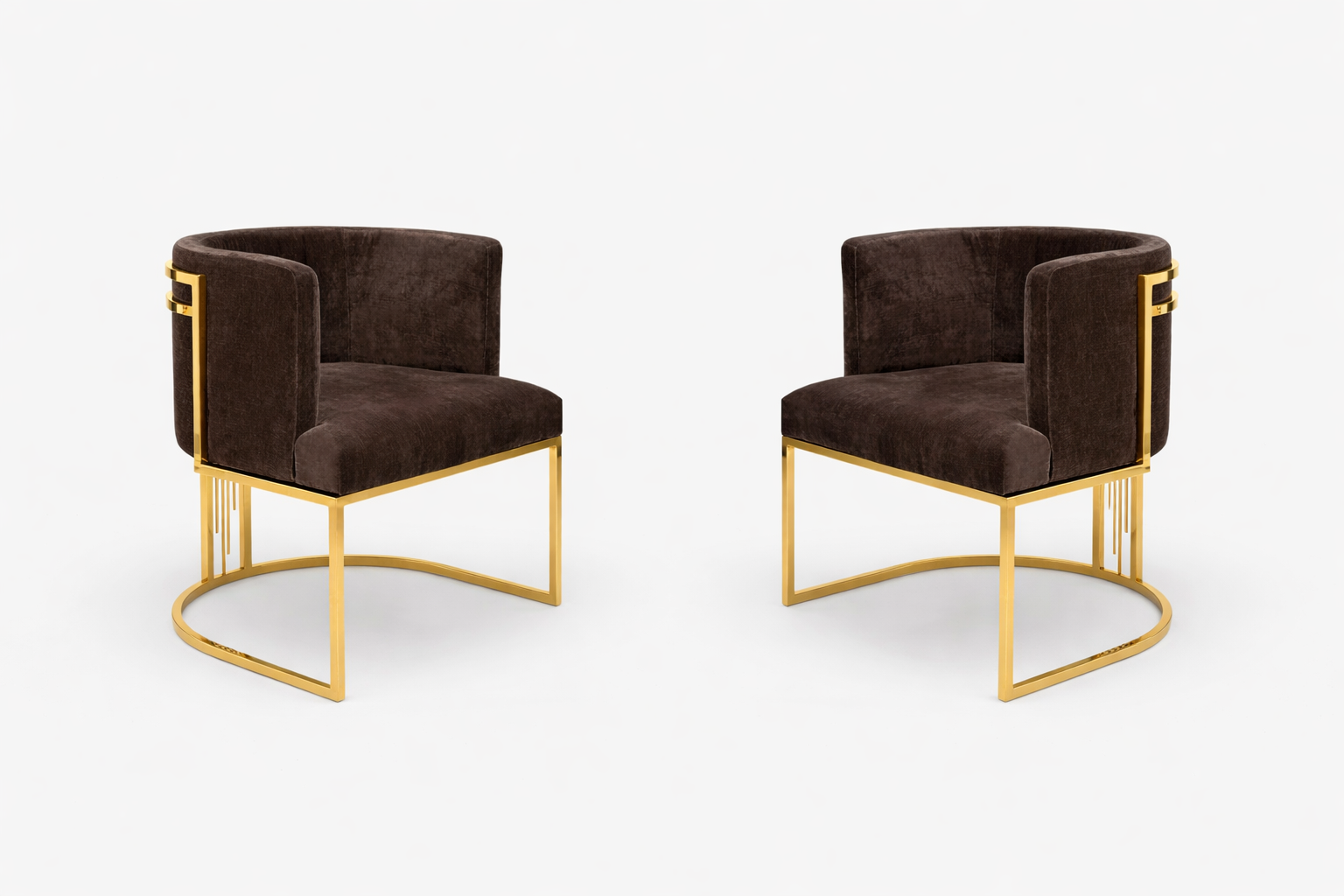
Call a professional upholstery cleaner if a stain will not lift, the chair has a large area of matting, or the care label says to use only solvent cleaners and you are unsure which product to use. For a chair that is badly damaged or no longer worth restoring, you can browse our 2 Piece Modern Velvet Accent Chairs set, which offers velvet upholstery and metal legs.
If your chair is in good shape but you want to protect it going forward, consider how to choose durable furniture fabrics that last, which explains which materials hold up best to regular cleaning.
For most velvet accent chairs, a mild solution of a few drops of dish soap in warm water works well, applied with a cloth and blotted dry. Use a dedicated upholstery cleaner when the care label allows water-based or solvent cleaning. Always test any cleaner on a hidden area first, since harsh or high-alkaline products can flatten the pile, discolor the fabric or leave water marks. Avoid bleach and strong all-purpose sprays on velvet entirely.
Yes, a small amount of dish soap diluted in warm water is a common and gentle option for many velvet chairs. Use only a few drops per cup of water, dampen a cloth rather than soaking the fabric, and blot the area. Rinse by blotting with a clean damp cloth, then dry thoroughly. Test on a hidden spot first, and stop if the color transfers to your cloth or the pile starts to change texture.
Start with dry dusting and vacuuming with an upholstery attachment to remove grit that can abrade the pile. Check the care label before using any liquid, test your cleaner on a hidden area, and work in small sections. Blot rather than rub, because rubbing crushes the nap and can permanently mark the surface. Let the chair air-dry completely, away from direct heat, and brush the pile gently once dry.
Once the fabric is fully dry, brush it lightly with a soft-bristle brush or a clean dry microfiber cloth, always in the direction of the nap. If the pile looks flattened, a handheld steamer held a few inches away can lift the fibers, followed by gentle brushing. Avoid pressing the steamer directly onto the fabric. If the damage persists or the chair has water rings that will not fade, consider a professional upholstery cleaner.


