How to Style Accent Chairs in Living Rooms: 2026 Guide

Article author: Editorial Team
Article published at: Oct 14, 2026
Article tag: accent chair and sofa combinations Article tag: accent chair ideas for small living rooms Article tag: accent chair placement in living room Article tag: accent chairs Article tag: how to choose an accent chair Article tag: how to style accent chairs in living rooms
How to Style Accent Chairs in Living Rooms: 2026 Guide

Table of Contents

Last Updated: October 14, 2026

Accent Chair Placement in Living Room: Where to Put Yours

The best accent chair placement in a living room keeps at least 36 inches of walkway clearance in main paths and 18 inches between the chair and the sofa.

2 Piece Leather Accent Chairs For Living Room

Here is the part most guides skip: a chair that looks great in a photo often blocks the exact path people walk through the room.

An accent chair is a single statement seat used to add color, texture, or function to a room, rather than to seat a crowd.

This guide from RuchiCollection covers placement, sofa pairings, small-room layouts, color coordination, and the clearances that keep a room feeling open.

Measure Walkway Clearance Before You Move Anything

Grab a tape measure before moving any furniture.

  • Main walkways: leave 36 to 48 inches
  • Paths between a chair and a sofa: leave 18 inches minimum
  • Space in front of a coffee table: leave 14 to 18 inches
  • Distance from a chair to a side table: arm's reach, roughly 24 inches

Small rooms change the math: if you cannot hit 36 inches in a main path, keep the chair out of the traffic line and tuck it into a corner.
Pro Tip Measure the diagonal, not just the walls. A chair angled at 45 degrees often fits a tight corner better than one pushed flat against the wall, and it opens up the walkway at the same time.
Runner 1 ( 3Rd Pic Photoroom (2)

Accent Chair and Sofa Combinations That Work

Pair an accent chair with a sofa by matching seat height and keeping the chair 18 inches away at a slight angle. The goal is conversation, not a waiting room lineup.

Three setups cover almost every room:

  1. Flank the sofa. Two chairs, one on each end, facing into the room. Best for wide living rooms.
  2. Opposite the sofa. One or two chairs across the coffee table. Best for conversation areas.
  3. Perpendicular. A single chair at 90 degrees to the sofa. Best for small rooms and open-plan living.

The third option is the one people overlook, and it is usually right for an apartment.

Two Chairs Facing a Sofa: The Conversation Area Setup

A conversation area needs chairs close enough to talk without raising your voice. Keep the gap between the sofa and the facing chairs under 8 feet.

Angle each chair about 15 degrees inward. That small turn signals "sit here and talk" instead of "sit here and stare straight ahead."

If you have a fireplace, treat it as the focal point and arrange the sofa and chairs around it rather than around the TV.

How to Choose an Accent Chair for Your Space

Choose an accent chair by measuring your space first, then matching its scale and shape to how you will use it. Style comes after fit.

Work through it in this order:

  • Measure the footprint. Mark the chair's dimensions on the floor with painter's tape. Stand back and look.
  • Check the seat height. A seat around 16 to 18 inches suits most adults for lounging.
  • Match the scale. A bulky chair overwhelms a small room. A delicate chair disappears in a large one.
  • Pick the function. Reading chair, extra dining seat, or work-from-home zone? Each needs a different shape.

Chair Shape and Scale: What Actually Fits

A chair's shape decides how much floor space it eats, even when two chairs list the same dimensions.

  • Wingback: tall back, cozy, best in a reading nook
  • Barrel: curved, compact, great for small rooms
  • Slipper: low and armless, easy to tuck into tight spots
  • Club: deep and wide, best for large rooms

Our 2 Piece Leather Accent Chairs for Living Room measure 28.34 by 26.77 by 30 inches, which suits most standard living rooms without crowding the sofa. The set also includes a round marble-top table, so the side table question solves itself.

For a softer look, the 2 Piece Modern Velvet Accent Chairs come in at 25.98 by 24 by 29.92 inches, a slightly smaller footprint that works well in apartments.

2 Piece Modern Velvet Accent Chairs

Accent Chair Ideas for Small Living Rooms

Small living rooms need chairs that multitask. Skip the oversized club chair and pick something you can move when guests arrive. The difference between cramped and comfortable usually comes down to three numbers: walkway width, chair footprint, and distance to the nearest door swing.

Start with the room's constraints, not the chair. Measure the longest clear wall, every doorway width, and the swing arc of any door opening into the room.

Layouts that work in tight rooms

  • Corner angle (best for rooms under 120 square feet). Place one barrel or slipper chair at a 45-degree angle in the corner, facing the sofa. A footprint around 26 by 26 inches fits most corners without eating the walkway; leave at least 18 inches between the chair and the sofa arm.
  • Perpendicular single chair (best for narrow rooms). Set one chair at 90 degrees to the sofa, its back to the longer wall. This keeps the main path along the opposite wall clear at 36 inches and avoids the "waiting room" look.
  • Window-wall chair (best for rooms with one focal point). Tuck a low-profile chair below the window sill if the sill sits at least 30 inches off the floor. A chair back taller than the sill will block light and make the room feel closed in.
  • Zone divider (best for open-plan apartments). Use a single chair, not a pair, to mark the edge of the living zone. Two chairs need breathing room; one chair plus a rug edge does the same job in half the floor space.
  • Movable chair (best for rooms that host guests). A lightweight slipper or accent chair you can pull into the conversation circle and push back against the wall afterward keeps the floor open day to day.

What to avoid in a small room

  • Two chairs facing the sofa in a room narrower than 10 feet. The gap drops below the 8-foot conversation distance and the walkway disappears.
  • Deep club chairs. A seat depth over 24 inches eats floor space and makes the room feel smaller even when the footprint is the same.
  • Chairs pushed flat against the wall. They read as storage, not seating, and block an outlet or vent.
Watch Out Do not push a chair flat against the wall to save space. It reads as storage, not seating, and it usually blocks the outlet or vent behind it.
Etsy Runner 1
Etsy Runner 1

Styling Accent Chairs by Room Type: Step-by-Step Examples

Different rooms call for different styling. Here are three setups you can copy.

Small apartment living room:

  1. Place one chair at 90 degrees to the sofa.
  2. Add a small round side table at arm's reach.
  3. Layer a throw blanket over one arm.
  4. Add two decorative cushions in a contrasting color.

Open-plan living space:

2 Piece Leather Accent Chairs For Living Room →

  1. Use two chairs to define the seating area from the dining zone.
  2. Face them toward the sofa to create an intimate seating area.
  3. Anchor both chairs on the same rug.
  4. Keep the walkway between zones clear at 36 inches.

Reading nook:

  1. Tuck a chair into the corner near a window or bookshelf.
  2. Add a floor lamp behind the chair for layered light.
  3. Place a side table for a book and a drink.
  4. Add a throw blanket for warmth.

Coordinating Colors, Textures, and Finishing Details

Coordinate an accent chair by pulling one color from your existing décor and repeating it twice more in the room.

Color: the three-point rule

Texture: mix by weight, not by trend

Pair textures that contrast in weight so the eye has something to rest on:

  • Velvet chair with a wood or metal side table
  • Leather chair with a linen or cotton throw
  • Woven or boucle chair with a smooth ceramic lamp base
  • Smooth fabric chair with a textured rug underneath

Keep patterns to two per room.

Rug sizing: the front-leg rule

Size the rug so the front legs of every chair and the sofa sit on it.

Side table height: match the arm, not the seat

A side table should sit at or just below the chair's arm height, typically 24 to 26 inches for most accent chairs.

Lighting: three sources, three heights

A finished arrangement uses three light sources at three heights:

  1. Overhead or ceiling light for general illumination
  2. A floor lamp behind or beside the chair for task light and depth
  3. A table lamp on the side table for warm, low light at seated eye level

A floor lamp behind the chair's shoulder throws light onto the reading page and adds shadow that makes the corner feel intentional.

Art and wall details

Hang art so its center sits around 57 to 60 inches off the floor, roughly eye level for a seated adult.
Key Takeaway Color repetition makes the chair look intentional. Rug size, table height, and three-source lighting make the arrangement look finished. Get the finishing details right and the color rule does the rest.
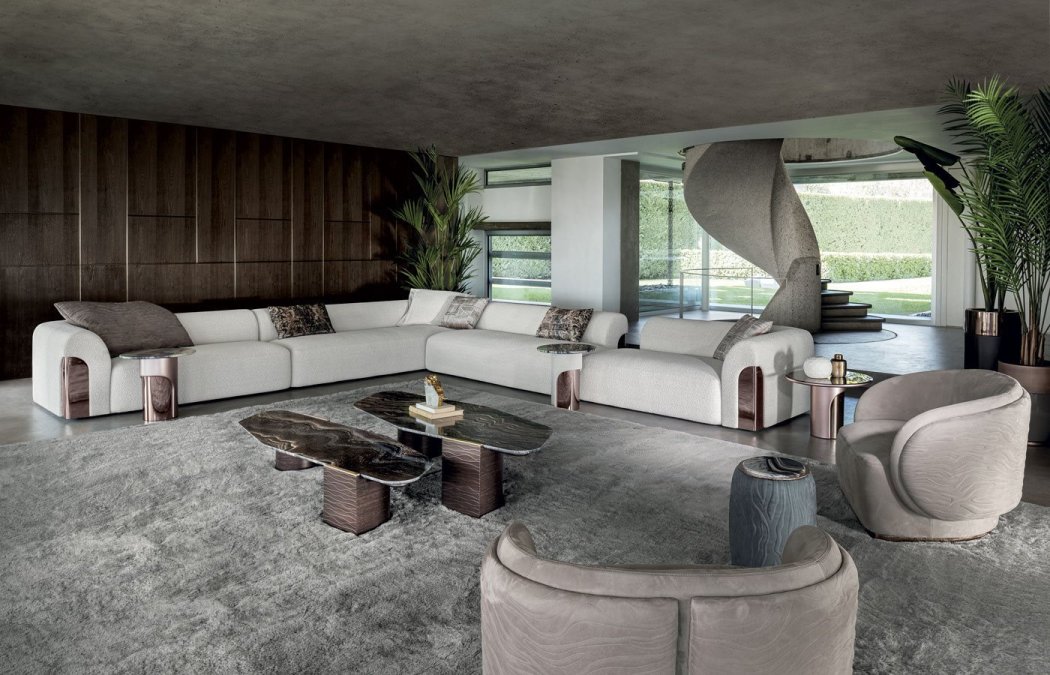
Divani Nip Dettaglio Ambientata

Accessibility and Household Needs to Plan For

An accent chair should work for everyone in the home, not just the person who picked it.

Plan for these:

  • Leave 36 inches for wheelchair or walker clearance in main paths
  • Choose a seat height around 18 inches if standing up is hard
  • Pick firm cushions over deep, soft ones for easier exits
  • Add a side table on the side the person favors
  • Keep cords and rug edges out of the walkway

If kids or pets share the room, leather and tightly woven fabrics clean up faster than loose weaves.

Conclusion

Styling accent chairs comes down to fit before fashion. Measure your clearances, match the chair to the room's scale, and coordinate one accent color across three spots. Do those three things and the room looks designed, not decorated.

At RuchiCollection, we stock accent chair sets with the side tables and cushions already matched, plus Buy Now Pay Over Time options through Synchrony. Browse our accent chair collection and find the pair that fits your space.


Frequently Asked Questions

Where should an accent chair go in a living room?

Place it where it serves a purpose, not just where there's empty floor. Common spots include angled toward the sofa to form a conversation area, beside a window for a reading nook, or in an empty corner next to a bookshelf. Leave at least 30 inches of walkway clearance so people can move through the room without squeezing past. If the chair blocks a natural path between the entry and the sofa, it's in the wrong spot.

Should accent chairs match the sofa?

No, and they usually look better when they don't. Matching everything makes a room feel flat. Instead, pick an accent chair that shares one element with your sofa, like a similar wood finish or a color pulled from your existing décor, then let the chair bring in a contrasting texture or accent color. A velvet chair next to a linen sofa, for example, adds visual interest without clashing.

Can you put two accent chairs in a small living room?

Yes, if you choose the right scale. Look for chairs under 26 inches wide and skip bulky armrests. A pair of slim accent chairs placed side by side against a wall or facing the sofa can define a seating area without eating up floor space. Keep at least 18 inches between the two chairs so they don't feel cramped, and avoid placing them in front of walkways.

How do you style an accent chair in an empty corner?

An empty corner needs more than just a chair. Add a floor lamp behind or beside it for layered lighting, a small side table for a drink or book, and a throw blanket draped over one arm. If the corner feels bare, hang art on the wall above the chair or place a tall plant nearby. The goal is to make the corner feel intentional, like a reading nook, not like a chair someone abandoned there.

Share